

DroneShield to guard Kansas City airspace for World Cup
Thu, 28th May 2026
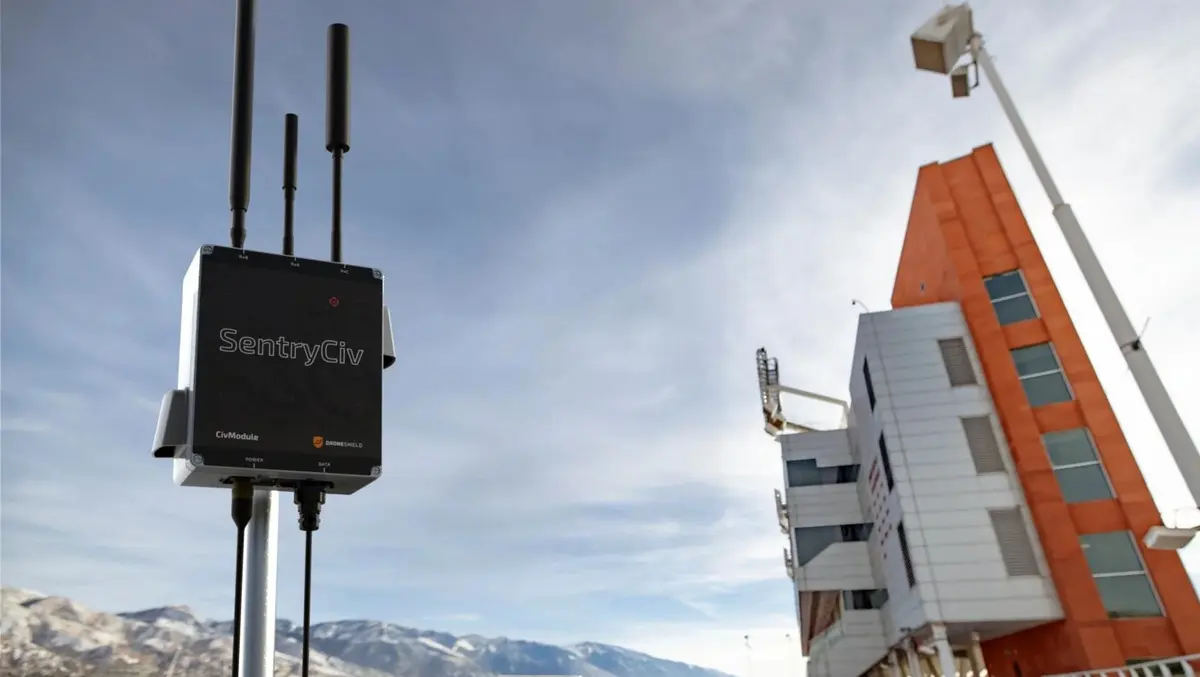
DroneShield will provide drone detection and response support for urban airspace security in Kansas City during the FIFA World Cup, working with the Kansas City Police Department across multiple sites in the metropolitan area.
The Australian counterdrone company will serve as the main detection and threat-response layer in a broader deployment involving Airspace Link's AirHub Portal, Echodyne radar technology and regional public safety agencies. The system is designed to give authorities continuous visibility over low-altitude airspace across several jurisdictions.
Kansas City is one of the host cities for the tournament, and the project reflects growing concern among police and event planners about drone use in crowded urban settings. Organisers and law enforcement agencies increasingly face a mix of authorised drone flights, police aviation, media activity and the risk of unauthorised aircraft operating in the same airspace.
DroneShield's role in the deployment will rely on radio-frequency sensing, sensor fusion, operational coordination and counterdrone tools. The arrangement is designed for urban areas where several kinds of aerial activity can occur at once and where authorities need a coordinated picture across a wide area rather than at a single venue.
Layered system
The initiative combines radar coverage, radio-frequency drone detection and operational airspace coordination. That layered model is intended to help public safety teams track activity, distinguish approved operations from suspicious ones and respond across multiple locations during a major international event.
Unlike single-site security set-ups focused on one stadium or precinct, the Kansas City model is built around regional awareness. This allows police and partner agencies to monitor low-altitude airspace across the metro area, an approach that may prove useful in cities hosting large sporting events spread across multiple venues and transport corridors.
Tom Adams, Director of Public Safety at DroneShield, said: "Ten years ago, most cities weren't thinking about drone threats at this scale. Kansas City is now helping pioneer a layered airspace security model built for the realities of modern urban environments."
The project also points to a shift in how urban authorities view drone management. What was once treated mainly as a venue security issue is now being approached as a broader public safety and airspace coordination task that extends beyond event days into routine city operations.
Major Greg Williams of the Kansas City Police Department described the work as part of a longer-term framework rather than a temporary measure tied only to the tournament.
"Protecting FIFA World Cup 2026 requires a new level of airspace coordination," Williams said. "Kansas City is building a long-term framework that helps public safety agencies safely manage growing drone activity across the metro area."
Broader trend
For DroneShield, the Kansas City deployment gives the company a visible role in one of the world's largest sporting events and places its systems within a multi-agency public safety network in the United States. The company is listed in Australia and operates in Australia, the United States and the Netherlands.
The announcement comes as governments and police forces examine how to manage increasingly crowded urban airspace. The rise in commercial drone use, media filming, emergency services flights and recreational activity has made low-altitude airspace more complex, particularly around stadiums, fan zones, transport hubs and city centres.
Companies in this field are increasingly offering integrated systems rather than stand-alone hardware. In Kansas City, DroneShield's tools are being paired with Echodyne radar and coordination software from Airspace Link to give agencies a shared operational picture across the region.
Eben Frankenberg, Chief Executive Officer of Echodyne, said: "Maintaining visibility across complex urban airspace environments requires persistent awareness and layered sensing capabilities that can support dynamic operational conditions. Kansas City represents an important example of how public safety agencies and technology partners are working together to support scalable, multi-site airspace security operations ahead of major public events."
That emphasis on persistent awareness suggests the project is intended to serve not only short-term event security needs but also future city operations. Cities preparing for major tournaments are under pressure to show they can secure airspace in the same way they secure streets, venues and transport networks.
The Kansas City deployment may also be watched closely by other host cities and by officials planning security for future sporting events, including those in Australia. The ability to coordinate responses across multiple agencies and jurisdictions has become more important as drone activity grows and cities seek to avoid piecemeal systems that cover only individual sites.
Michael Healander, co-founder, president and chief executive officer of Airspace Link, said: "What Kansas City is building is larger than a World Cup security deployment. This is foundational infrastructure for the future of coordinated urban drone operation."