

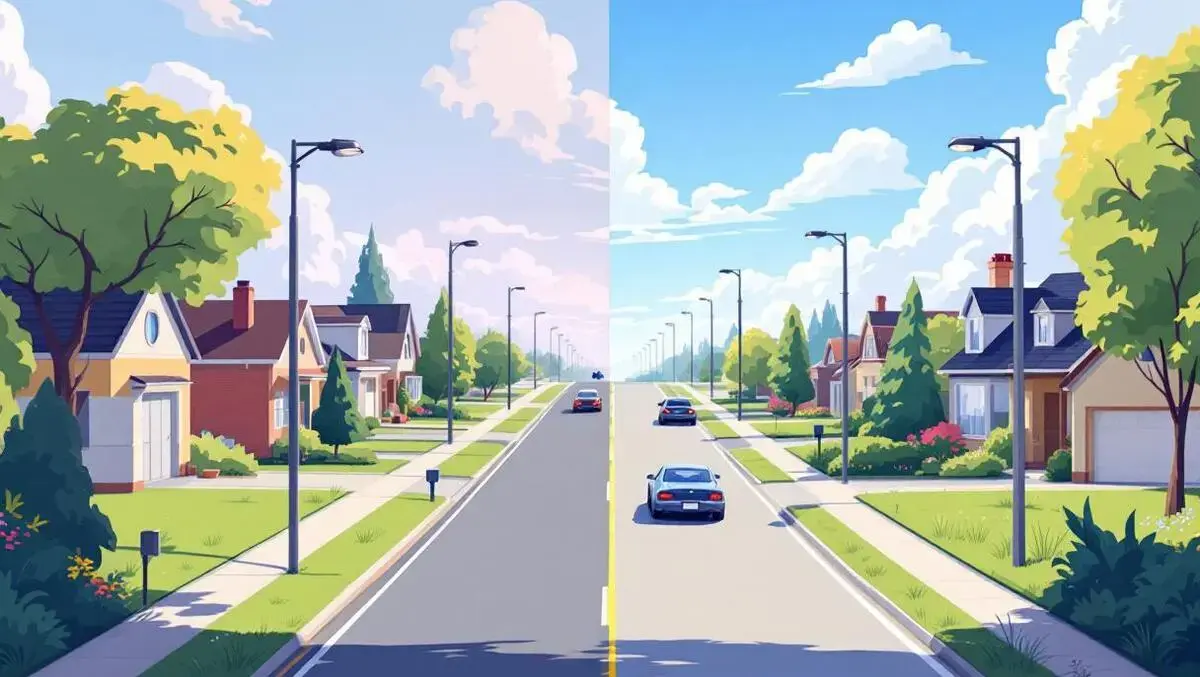
Google adds Street View grounding to Project Genie
Wed, 20th May 2026 (Yesterday)
Google has added Street View grounding to Project Genie, linking the experimental world model to real-world imagery from selected locations in the United States.
The update lets users create interactive virtual environments based on actual places, then change those scenes with different visual styles and characters. Users can choose a location through a maps pin, select an optional style such as "Desert Sands", "Stone Age" or "Ocean World", and generate a world whose starting point is tied to Street View imagery.
Project Genie is Google's experimental prototype built on Genie, a general-purpose world model designed to generate interactive environments. In research, the model has helped agents learn and reason in virtual settings, and Waymo has used it to simulate road environments.
Real-world scenes
By combining generative modelling with Street View, Google is aiming to anchor synthetic environments in recognisable locations rather than fully invented scenes. The new option lets users explore familiar places in altered forms, including underwater or historical-looking versions of real sites.
Google's examples include viewing the Golden Gate Bridge in an underwater setting with fish, or reimagining the Fort Worth Stockyards in Texas in a black-and-white film style meant to evoke the 1920s. The Street View-based feature is currently limited to U.S. locations.
The system uses Maps Imagery Grounding, the same technology developers use to create AI-generated visuals with Street View. In Project Genie, that imagery forms the basis of a starting environment that can then be transformed by prompts describing the setting and characters.
Wider rollout
Google is also broadening access to the prototype. Project Genie, including the new Street View feature, is rolling out to eligible Google AI Ultra subscribers worldwide aged 18 or over.
The Google AI Ultra plan is priced at USD $200. Access is being introduced gradually rather than all at once.
The rollout marks another step in Google's effort to move world models beyond research demos and into consumer-facing tools. World models are designed to simulate environments that software agents or robots can navigate and interact with, and technology companies increasingly see them as useful for training AI systems in settings that resemble the physical world.
For Google, tying Project Genie to Street View also draws on one of its longest-established mapping assets. Street View imagery has traditionally been used for navigation and location search, but image archives and mapping data are now being used in a wider range of AI products, including synthetic scene generation and spatial reasoning systems.
Project Genie remains an experimental research prototype within Google Labs. Google is still working to improve image detail and accuracy as it expands the tool to more users.
Street View imagery in Project Genie is available now for U.S. locations, with broader geographic coverage expected over time as Google extends the feature to more places.