

Portainer & Xiid team up on secure edge management
Fri, 22nd May 2026
Xiid and Portainer have formed a technology partnership to integrate their products for managing and securing distributed container infrastructure. The tie-up targets enterprise IT, industrial and IoT deployments.
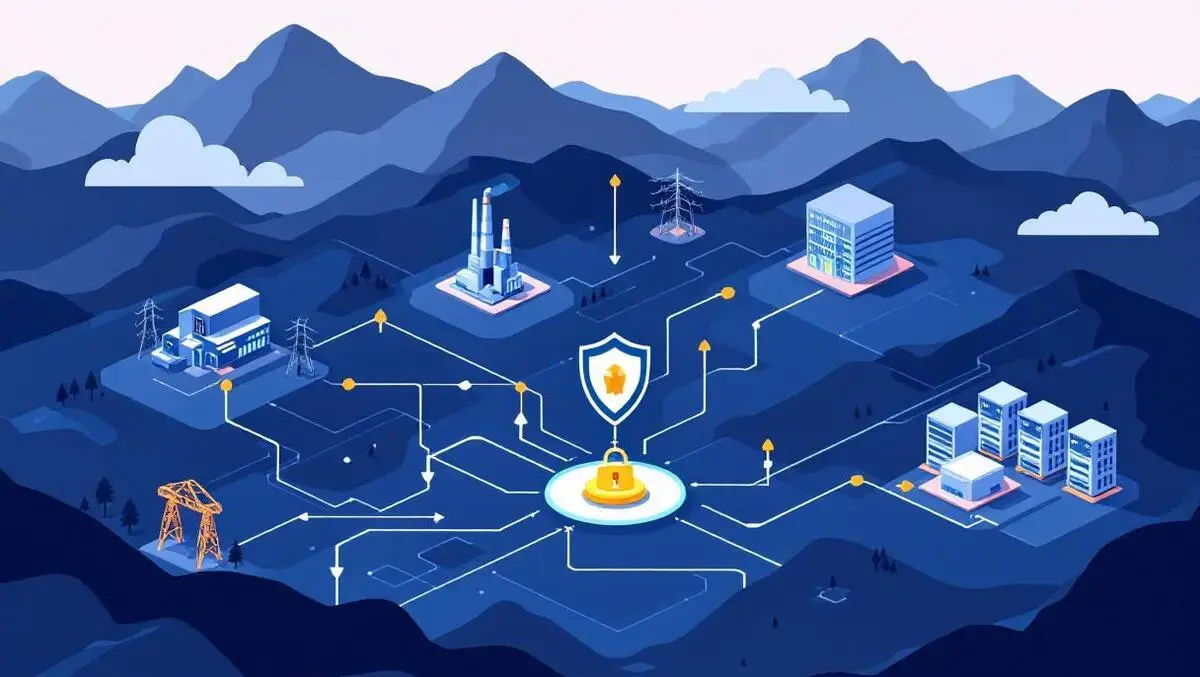
The arrangement combines Portainer's edge container management software with Xiid's Terniion network security system in a single architecture for remote and distributed sites. The goal is to let operations teams manage workloads across manufacturing plants, healthcare facilities, defence environments and other remote locations without exposing inbound ports or credentials.
Portainer's software is used to deploy, update and monitor containerised workloads across edge, on-premises and cloud sites from a central console. Its KubeSolo single-node Kubernetes distribution can run on as little as 200MB of RAM, positioning it for smaller edge gateways and resource-constrained devices.
Security layer
Xiid's Terniion product is designed to secure access to those environments through outbound-only, application-specific connections. This removes the need for open inbound ports and is intended to limit lateral movement if an endpoint is compromised.
The partnership addresses a longstanding issue in edge and remote infrastructure: systems need to be accessible for administration, but that same accessibility can create openings for attackers. The combined setup is intended to reduce that exposure while preserving operational control over widely dispersed systems.
Neil Cresswell, Chief Executive Officer, Portainer, said the issue had shaped how remote infrastructure is managed.
"Edge infrastructure has a fundamental challenge. To manage it, you have to be able to reach it, and anything reachable can be attacked," said Neil Cresswell, Chief Executive Officer, Portainer. "Xiid removes that constraint entirely. Its Terniion platform is designed to make edge nodes invisible at the network level. This pairs perfectly with how we manage workloads across distributed environments. Users get full operational control without the attack surface that usually comes with it. That's a combination that got me really excited and what drove us to partner."
Xiid said the setup is intended for operations running production workloads in environments with tighter security demands and uneven connectivity, including manufacturing plants, remote sites and facilities where administrators still need access to systems spread across many locations.
"With Terniion, edge nodes become virtually invisible at the network level," said Steve Visconti, Chief Executive Officer, Xiid. "That means no inbound ports, no exposed credentials, and no attack surface for external actors to target. That is critical for operations running production workloads in increasingly distributed environments such as defense agencies, healthcare facilities, manufacturing plants, remote sites, and other locations where connectivity is limited and security requirements are high."
Edge focus
The two companies are targeting a market shaped by the growth of connected equipment and software outside traditional data centres. Industrial operators, utilities, transport groups and healthcare providers increasingly run applications at the edge to support monitoring, automation and local processing, but those deployments can be difficult to manage consistently at scale.
Portainer provides a single management layer across thousands of sites, while Xiid secures the network path between operators and those distributed workloads. Together, they argue, those layers remove the trade-off between operational reach and security exposure.
Visconti said many security models still rely on the assumption that infrastructure must remain reachable in the conventional sense to be managed.
"Most security architectures still assume infrastructure must remain reachable to be operational," said Visconti. "Terniion bypasses that assumption. Instead of protecting exposed management paths, we eliminate the need for them by enabling secure, outbound-only, application-specific interactions between workloads, operators, AI systems, and distributed infrastructure."
Industry shift
The partnership also reflects a broader shift in infrastructure operations as more companies seek to apply cloud-style management practices to remote physical sites and industrial environments. In those settings, containerised applications are increasingly used to standardise software deployment, but networking and security remain significant constraints.
Portainer counts large industrial names including GE, Cummins and Baker Hughes among users of its software. That customer base points to its focus on sectors where fleets of remote assets, operational technology and connected devices have become part of day-to-day IT operations.
Cresswell said the partnership is intended to avoid forcing customers to choose between manageability and protection.
"This partnership reflects our belief that the right answer to infrastructure security is not to choose between control and protection," added Cresswell, "it is to give teams both."