

Suprema unveils facial access tools for North America
Thu, 26th Mar 2026
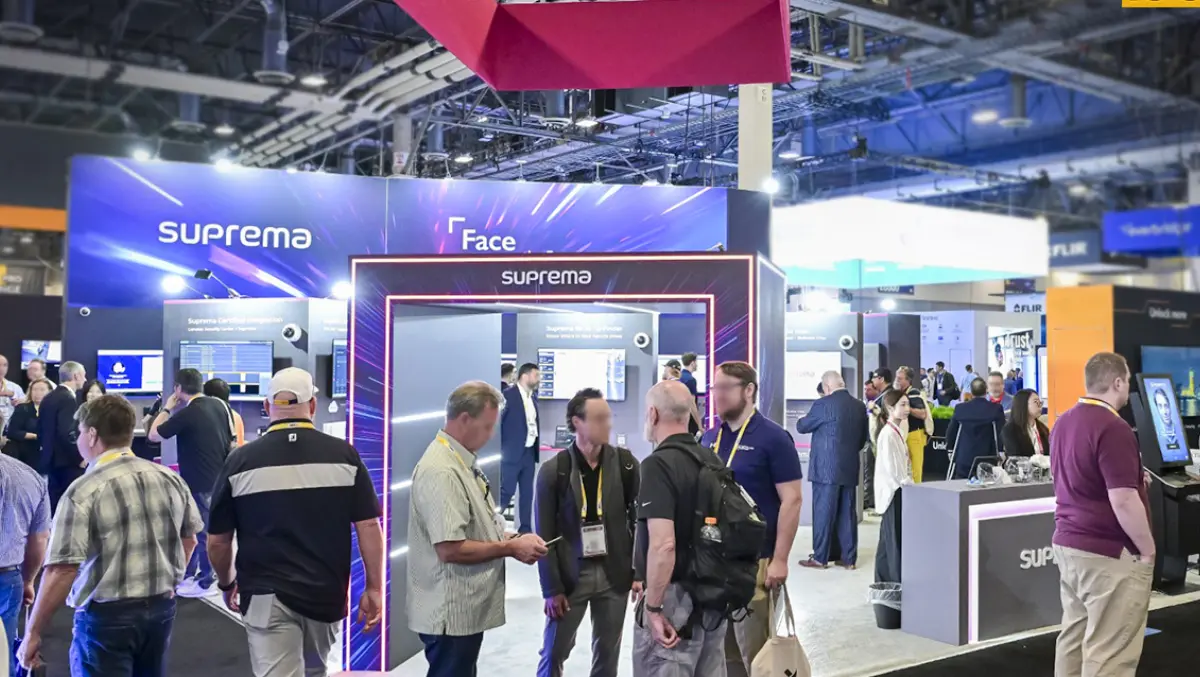
Suprema is presenting new facial authentication products and access control platforms at ISC West 2026, with the line-up aimed at the North American security market.
The South Korea-based security technology provider is showcasing BioStation 3 Max, a biometric terminal planned for release in the first half of the year. Designed for high-security sites and commercial building lobbies, it combines facial authentication with fingerprint recognition, mobile access, QR, RFID and PIN.
The terminal also includes a large touchscreen and a built-in VoIP intercom, bringing visitor communication and access control into one device. It is intended for settings where operators want tighter entry controls and a simpler visitor process.
Facial search
Suprema is also introducing Q-Finder, a facial authentication system designed to identify unauthorised individuals and persons of interest across private-sector sites such as department stores and casinos. It can also be configured for missing persons and suspect searches in public safety settings, including police and other public institutions.
Q-Finder works with existing CCTV infrastructure and is designed to identify persons of interest in real time. It also uses a Geographic Information System to map a subject's movements, giving operators a visual record to support incident response and resource allocation.
The new products sit alongside two software platforms that reflect a broader split in the physical security market between local installation and cloud-based management. Customers and integrators can choose between the on-premise BioStar X platform and the cloud-native BioStar Air system, depending on operational, regulatory and IT requirements.
Platform choice
BioStar X combines access control, video surveillance and system integrations in a single platform. It is designed for both smaller installations and larger multi-site deployments, allowing operators to monitor access events, video feeds, maps and alarms from one interface.
By contrast, BioStar Air connects biometric readers directly to the cloud and removes the need for on-site servers. Readers require only a single Ethernet connection, a setup intended to reduce installation time, cabling work and overall project costs for installers, dealers and end users.
The split reflects a market that is not moving in one direction alone. Some organisations still favour local control for compliance or legacy reasons, while others are adopting cloud systems to simplify deployment and centralise administration across multiple sites.
Suprema is also emphasising compatibility with established security providers. Its systems are being shown with integrations for Genetec, Software House, AMAG and Brivo, allowing biometric readers and software to be added to existing security estates rather than forcing a full replacement of installed systems.
That approach is particularly relevant in North America, where many building operators and institutions run mixed security environments assembled over several years. Integrators often need to add new identification tools or management software without disrupting existing access systems, cameras and control rooms.
The market backdrop has also lifted interest in facial recognition and other touchless entry methods. Demand in the US has grown across critical infrastructure and commercial buildings, where operators are seeking more secure access while limiting friction for employees, tenants and visitors.
Facial authentication remains sensitive because of privacy concerns, data-handling requirements and the potential for regulatory scrutiny. Suppliers have increasingly responded by focusing on deployment options, local control, system transparency and the ability to integrate with infrastructure already in place.
For Suprema, North America is a key market for that pitch. By offering a mix of device-based authentication, software deployment options and integrations with larger security ecosystems, the company is positioning itself as a supplier that can fit into both new installations and upgrades to existing estates.
Bob McKee, President of Suprema America, set out that message as the company presented the range.
"Our customers and partners are asking for secure and seamless access experiences," he said. "By combining advanced AI facial authentication with both on-premise and cloud-native platforms, and by offering third-party integrations with leading security ecosystems, we are giving system integrators and security professionals the flexibility to modernize their security systems on their own terms while preserving their existing investments, said McKee.