Container Security stories
The update lets businesses run sensitive AI workloads inside verified trusted execution environments on Kubernetes without exposing data or models to operators.
Joint users of Kubernetes can now move from finding vulnerabilities to hardening container images faster as the gap to exploitation narrows.
Rising use of AI coding tools is widening software supply-chain risks for businesses across the Middle East, Türkiye and Africa.
The move places Illumio in a vendor-neutral model that helps organisations judge how to contain breaches in increasingly connected AI systems.
The move puts Agent Substrate, gVisor and OpenRL under neutral governance as companies race to secure and scale automated workloads.
Defenders are being told to hunt for suspicious PHP activity as GuidePoint warns the new flaws could already be probed, even without confirmed indicators.
Security teams may gain faster investigations as CrowdStrike links Falcon to Dynatrace telemetry and brings protection to CoreWeave's AI cloud.
The add-on lets security teams enforce runtime monitoring across large Kubernetes fleets without manually deploying agents or distributing API keys.
Attackers are already probing the flaw, while more than 70% of PHP installations may not receive a patch, Qualys said.
Supply chain compromises helped actively exploited flaws to 215 in the first half of 2026, as attackers used trusted tools and platforms to steal credentials.
Joint customers can now see RapidFort's remediation guidance inside Wiz, helping them triage container CVEs without changing scanning workflows.
It widens Broadcom's support model beyond Spring, giving customers verified fixes for Java, Python, Node.js and data services as vulnerabilities surge.
Enterprise users should gain tighter control over AI agents, as SAP and NVIDIA link runtime isolation with business authorisation and audit trails.
Teams running AI agents at scale could save idle compute and tighten isolation as Google opens Agent Substrate on Kubernetes Engine.
Australian firms could face faster breaches as model-driven attackers shrink exploit times to hours, making containment and zero trust vital.
Defenders now have minutes, not hours, as attackers use agentic AI to automate credential theft, scanning and extortion across live operations.
Customers will get human-verified open source fixes as Broadcom expands Spring security coverage and counters risks from AI-generated patches.
The experimental setup lets AI teams run untrusted model code in isolated Ray clusters on Google Kubernetes Engine without exposing host containers.
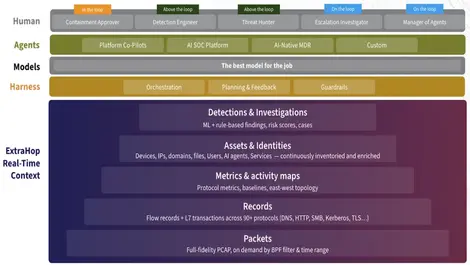
Security teams face wider blind spots as ExtraHop's new sensor brings full inspection of 400 Gbps data centre traffic to RevealX.
Growing use by major tech groups is helping open source secrets manager OpenBao win trust as cloud and AI credential risks mount.