AI Safety stories
Readers can now track the power, land and supply-chain pressures behind AI deployment as OMIKINA adds evidence-led reporting and an infrastructure atlas.
The system lets enterprises block risky agent actions in 71 milliseconds, as autonomy raises the odds of damaging mistakes.
Developers can now let Copilot switch models mid-task as GitHub trials a system that cut benchmark costs by up to 67 per cent.
Existing customers get six years of support as Cloudera shifts new AI and analytics workloads to a Hadoop-free platform due in November.
The integration aims to help customers separate real attack paths from false alarms, speeding remediation across several security workflows.
The deal puts a major open AI model hub under Nvidia's control, raising questions over whether its neutrality will survive intact.
Businesses using AI agents can now inspect prompts and responses inline, as F5's guardrails plug into MuleSoft's Agent Fabric.
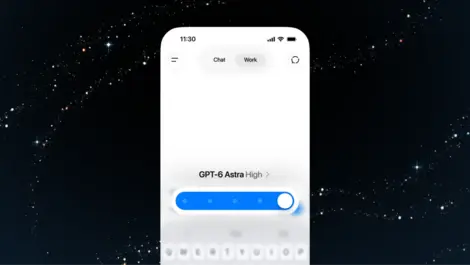
The rollout will reach paid ChatGPT tiers and developer channels after early testing showed faster task completion, stronger coding and tighter safeguards.
Trusted employees and AI agents are now seen as prime insider risks, with deepfake fraud and hidden access gaps worsening the threat.
Banks could use the new platform to automate routine tasks and speed decisions, but only within strict guardrails and audit trails.
As AI coding agents speed up development, JFrog is adding controls meant to keep governance, compliance and patching from lagging.
The hire signals rising pressure on security teams as AI expands attack surfaces across hybrid cloud systems and customer data flows.
The shift could help companies manage AI-driven service queries more securely as Genesys adds governance and context across customer journeys.
The USD $22 million backing is set to fund product expansion into financial crime and compliance as the London-based firm broadens beyond cybersecurity.
Machine-speed discovery is shrinking defenders' lead time, as AI now uncovers obscure flaws and turns them into exploits before patches land.
Despite high confidence in their controls, most firms still let AI agents run with broad access, and 29% have seen real harm.
With women still only 17% of cyber workers in the UK and Australia, executives warn AI could deepen security blind spots unless talent widens.
The new tools aim to curb prompt injection, data leakage and rogue AI activity as firms deploy agents with wider system access.
A record shortlist across 20 categories spotlights women, non-binary people and allies shaping Australia's banking, health and education systems.
Privacy safeguards and live translation features are designed to ease consumer concerns as the AUD $799 glasses enter Australia's smart eyewear market.